The opening week of playoff football has been some of the most entertaining football we have been able to witness this year as playoff football should be. From last-second heroics to momentum-swinging defensive stands, Wildcard Weekend reminded fans why January football occupies a space of its own in the sport. And while the absence of the Kansas City Chiefs from the postseason raised more than a few eyebrows, it also quietly added a sense of unpredictability that only heightened the spectacle.
Jokes aside, this weekend was defined by its physicality and emotion. Hard hits echoed across stadiums, long-standing rivalries reignited under playoff pressure, and improbable comebacks unfolded when seasons appeared all but over. However, as is often the case when the stakes are highest, the thrills came at a cost. Several teams emerged not only with victories and defeats, but with mounting injury concerns that may shape the remainder of their postseason runs. With that in mind, Wildcard Weekend can be best understood through three lenses: the good, the bad, and the injured.
The good:
1. The Buffalo Bills still rock the AFC
Well, at least for another week. The Buffalo Bills may not have exceeded expectations this season after surrendering the AFC East crown to the New England Patriots, but when January arrives, they remain a team no one in the AFC is eager to face. That was evident in Jacksonville, where Josh Allen delivered one of the toughest performances of Wildcard Weekend in a 27–24 road win — Buffalo’s first postseason victory away from home in more than 30 years. Under constant pressure, Allen completed 28 of 35 passes for 273 yards and a touchdown, added two rushing scores, and played turnover-free football, repeatedly extending drives with his legs to close the game out. It may not silence every critic, but performances like this challenge the growing belief around the league that the Bills’ championship window is beginning to close.
2. The Chicago Bears most certainly have what it takes
Under pressure — Freddie Mercury’s words could not have been more fitting for what unfolded at Soldier Field. When the Packers carried a 21–3 lead into halftime, it felt as though Chicago’s long-awaited return to playoff relevance was about to be cut short just as quickly as it had arrived. Green Bay controlled the tempo, Caleb Williams endured a shaky opening half, and for long stretches it appeared the moment might be too big for a Bears team still learning how to win on the postseason stage.
But pressure is the defining currency of playoff football, and it is often where quarterbacks are truly measured. In his postseason debut, Williams responded exactly as franchise quarterbacks are expected to, rallying the Bears from an 18-point deficit and throwing for 361 yards in a dramatic 31–27 comeback. His 25-yard go-ahead touchdown to DJ Moore with 1:43 remaining capped a fourth quarter in which Chicago outscored Green Bay 25–6, sealing the franchise’s first playoff win in 15 years. In January, talent gets teams to the playoffs, but it’s a quarterback’s response under pressure that determines how long they stay there.
3. The New England Patriots are not frauds
In fact, they’re back — and increasingly uncomfortable to play against. Yes, the Chargers’ offensive line struggled mightily on Sunday night, but to dismiss New England’s performance because of that would miss the point entirely. The Patriots’ defense didn’t simply benefit from weakness; it dictated the game. From the opening drive, they controlled the line of scrimmage, closed throwing windows, and turned a matchup between two promising young quarterbacks into a grind that played squarely to their strengths.
New England’s 16–3 Wild Card win was a defensive clinic, highlighted by five sacks, relentless pressure on Justin Herbert, and repeated red-zone stops that kept Los Angeles out of the end zone entirely. Drake Maye wasn’t perfect, conceding two turnovers and nearly a third, but he made the critical plays when they mattered most, using his legs to extend drives and delivering a decisive 28-yard touchdown strike to Hunter Henry in the fourth quarter. He totalled for 268 passing yards as well as 66 rushing yards to go with a touchdown pass. For a team many were quick to label as pretenders, New England’s first playoff win since 2019 was less about flash — and more about proof.
4. Brock Purdy don’t need no help
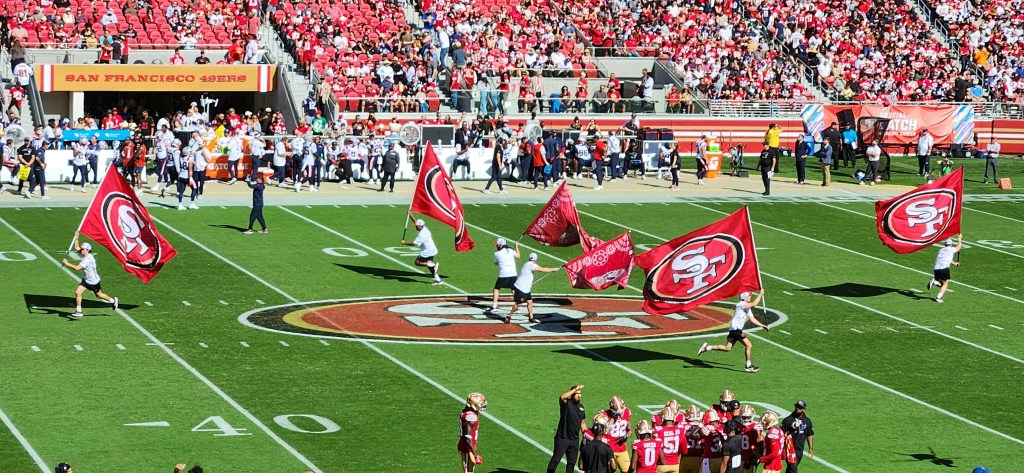
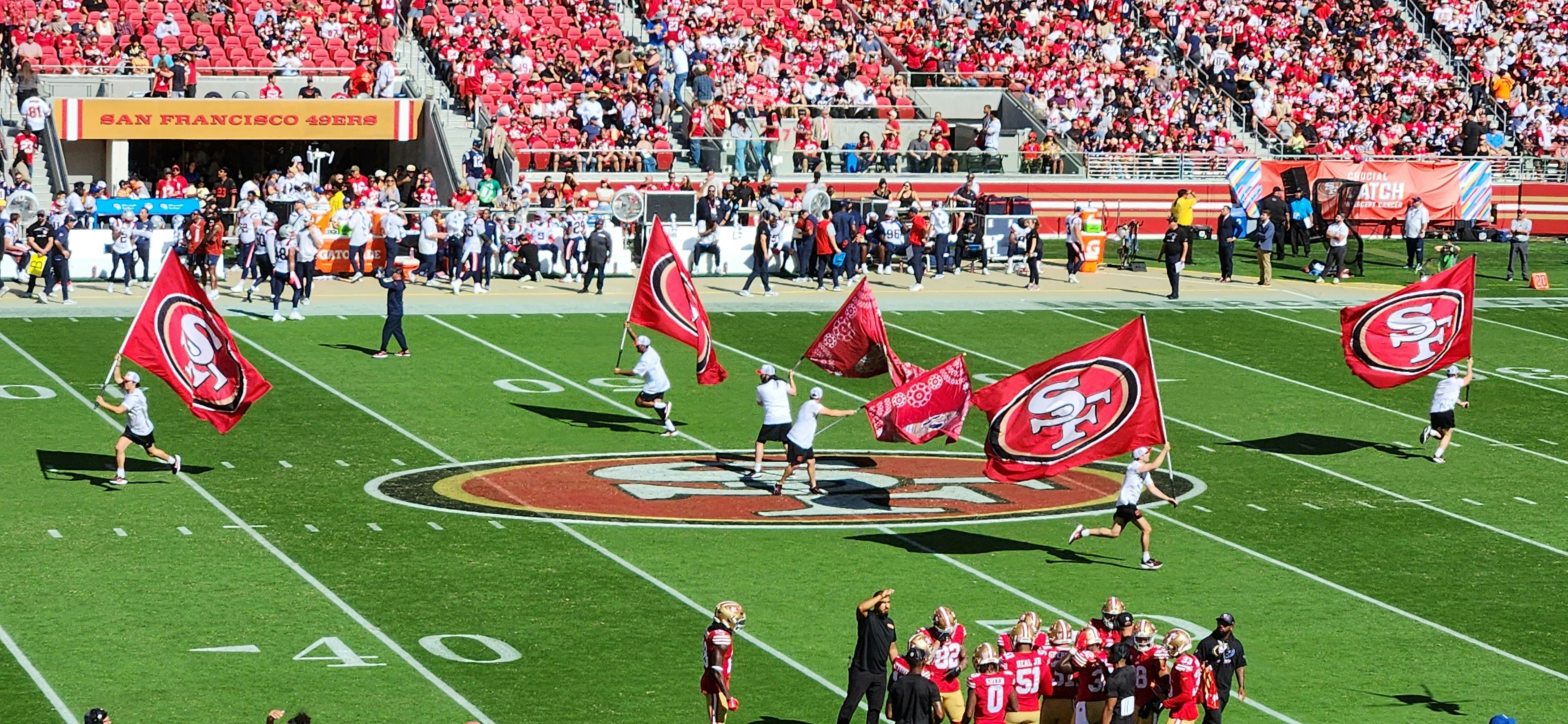
Plagued by injuries, the 49ers entered the postseason with tempered expectations, and those doubts only grew when George Kittle went down with a season-ending Achilles injury in the second quarter. None of it mattered to Brock Purdy. Against the defending champion Eagles, Purdy delivered a composed, authoritative performance, throwing for 262 yards and engineering the decisive late drive that sealed a 23–19 road win in Philadelphia. He shrugged off two interceptions, made the critical throws when the game tightened, and capped the night with a go-ahead touchdown to Christian McCaffrey in the fourth quarter. In a postseason defined by pressure and circumstance, Purdy once again showed that San Francisco’s success is not about who’s missing — it’s about who’s under center.
5. Texans defence looking mighty fine right now
Houston’s defence continues to look like a genuine championship unit, carrying the Texans to a dominant 30-6 road playoff win over the Steelers despite an uncharacteristically shaky night from C.J. Stroud. After not fumbling once during the regular season, Stroud put the ball on the ground twice and threw a pick, yet Pittsburgh managed just three points off those turnovers as the Texans smothered them all night. Houston limited the Steelers to 175 total yards, forced multiple takeaways, and put the game away with a Sheldon Rankins fumble-return touchdown and a Calen Bullock pick-six, prompting DeMeco Ryans to call it the best defensive performance in franchise history. If the Texans are going to make a deep postseason run, this defence is the reason why.
The bad:
1. The Chargers o-line woes
Anyone who watched the game on Sunday night would have bore witness to the beating that Justin Herbert received. Snap after snap Justin Herbert was under constant pressure, finishing with just 159 yards on 19-of-31 passing, no touchdowns, and six sacks—including a fumble—highlighting the struggles of a line that has rotated through nine different combinations this season due to injuries to Rashawn Slater and Joe Alt. Despite Herbert’s elite talent and the team’s 11-win regular season, the postseason has exposed the Chargers’ offensive structure as fragile. With both bookend tackles expected back, the interior line remains in flux, and the team will need smart moves in free agency and the draft to give Herbert the protection he needs to compete at a high level.
2. Wiiiddeeee right — Packers special teams
The Packers’ playoff exit against the Bears once again put a spotlight on their struggling special teams. Kicker Brandon McManus missed two field goals and an extra point, the unit allowed a big return, and penalties compounded the damage—continuing a trend that left them 21st in DVOA this season. While blowing a 21-3 halftime lead cannot be pinned solely on special teams, the mistakes in coverage and kicking were costly. Head coach Matt LaFleur has left the door open for staff changes, including the future of special teams coordinator Rich Bisaccia, as the team prepares for a pivotal offseason. Whether LaFleur returns or not, the Packers’ coaching staff will almost certainly look very different in 2026, as internal promotions and potential departures could reshape the roster behind the scenes.
The injured:
Injuries continued to pile up across the Wild Card round, and for several teams, the fallout could linger well beyond this weekend. Houston was hit hard at wide receiver, with Nico Collins and Justin Watson both entering concussion protocol in the second half, while safety Jaylen Reed briefly exited after aggravating a knee issue. New England also dealt with secondary concerns, as Christian Gonzalez was ruled out in the second half and placed in concussion protocol, though Carlton Davis was able to return after leaving early with a toe injury. Green Bay entered already shorthanded up front with right tackle Zach Tom inactive due to a knee injury, and depth took another hit when backup lineman Jacob Monk exited in the first half with a biceps issue.
The damage elsewhere was even more significant. Chicago lost linebacker T.J. Edwards for the season after he suffered a broken fibula in the second quarter, while left tackle Ozzy Trapilo is also likely done after a knee injury on the Bears’ go-ahead drive, though cornerback Kyler Gordon did return from injured reserve. Buffalo’s secondary took a major blow when safety Jordan Poyer was ruled out with a hamstring injury, forcing the Bills to lean on young, inexperienced defensive backs. San Francisco suffered one of the biggest losses of the weekend, with George Kittle ruled out for the remainder of the playoffs due to an Achilles injury, and Jacksonville’s offensive line was unsettled by injuries to Patrick Mekari and Ezra Cleveland. Philadelphia escaped relatively unscathed, though Saquon Barkley briefly raised concern late before staying loose on the sideline, as the injury toll continued to shape the postseason picture.
Wild Card weekend delivered the kind of football fans wait all season for—tight games, momentum swings, and pressure-filled moments where every mistake mattered. The good earned another week through composure and execution, the bad was exposed by flaws that had been lingering all season, and the injury list continued to grow at the worst possible time. For the winners, they’ll be looking to next week to continue to march towards the Super Bowl; for others, the offseason begins—but the message across the league is clear: in January, margins are thin, and nothing is given.
 Overtime
Leave a comment