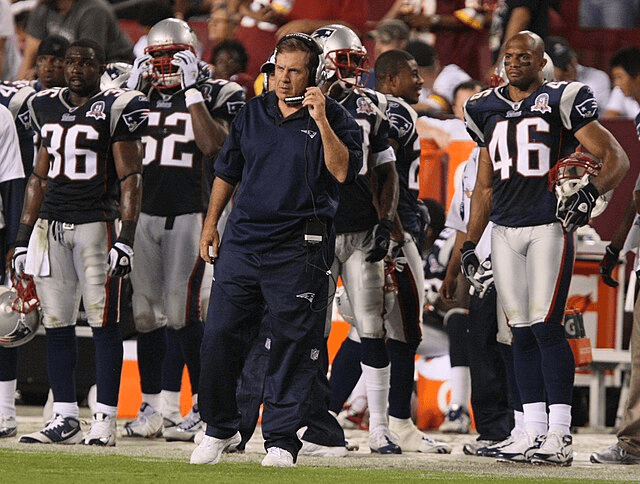
As news circulates that Bill Belichick will not be a first-ballot Hall of Famer, outrage has rippled across the sporting world, with many calling the decision a profound injustice to the game. The eight-time Super Bowl–winning coach, architect of the New England Patriots dynasty alongside Tom Brady and a two-time champion as defensive coordinator with the New York Giants, reportedly fell short of the required 40-vote threshold for first-ballot induction. The revelation was leaked to the media on Wednesday.
While the identities of individual voters remain largely unknown, the decision has been met with widespread criticism from fans and media alike. Several former Patriots who played key roles during Belichick’s tenure, including Tom Brady and Rob Gronkowski, publicly condemned the outcome, labelling it a “snub.”
Patriots owner Robert Kraft also voiced his displeasure, stating:
“If he’s not a first-ballot Hall of Famer, then there really is no coach who should ever be a first-ballot Hall of Famer. It’s completely ridiculous.”
Criticism was not limited to current and former members of the Patriots organisation. Prominent figures from across the NFL community also rallied behind Belichick in the days following the announcement, including Kansas City Chiefs quarterback Patrick Mahomes and Hall of Fame coach Jimmy Johnson, who were among the many voices expressing support.
Not everyone, however, agrees that Belichick’s résumé warrants first-ballot induction. Some critics continue to point to the Spygate scandal of the mid-2000s as a lasting stain on his legacy, arguing that it undermines the integrity of the Patriots’ early success. Others contend that Belichick’s achievements are inseparable from the presence of Tom Brady, suggesting the quarterback, rather than the coach, was the primary force behind the dynasty. These critics also highlight New England’s struggles in the post-Brady era as further evidence that Belichick’s success was, at least in part, circumstantial.
To determine whether Belichick’s case for Hall of Fame induction truly withstands scrutiny, these criticisms warrant closer examination. I will examine both of these claims.
I hold the view that any individual who deliberately attempts to undermine the integrity of a sport should not be afforded its highest honours. A commonly cited example is Barry Bonds. Despite his extraordinary on-field success and the likelihood that he would have been a first-ballot Hall of Famer even before the use of performance-enhancing drugs, Bonds ultimately chose to seek an illegal competitive advantage. In doing so, he compromised the integrity of the game and, in the eyes of many, weakened his claim to its most significant forms of recognition. I share this stance, but I also believe it should be more consistent.
So this begs the question of Spygate: did Bill Belichick, and by extension the Patriots organisation, deliberately attempt to undermine the integrity of the sport to gain an illegal competitive advantage? Based on the available evidence, the answer appears to be no. The 2007 controversy centred on the Patriots filming the New York Jets’ defensive signals from an unauthorised sideline location, not on the act of videotaping itself, which was permitted from designated areas under NFL rules at the time. Belichick later stated that he believed the practice was legal provided the footage was not used during the game, an interpretation he discussed with Commissioner Roger Goodell. While the league ruled that this understanding was incorrect, Goodell acknowledged that the tapes were not used to gain an in game advantage.
The NFL nevertheless imposed significant penalties, fining Belichick a record $500,000, docking the Patriots a first round draft pick, and confiscating and destroying the tapes after review. No championships were vacated and no further sanctions followed the investigation. Several coaches, including Hall of Famer Jimmy Johnson, later acknowledged that similar practices were common across the league at the time, prompting the NFL to issue clearer guidelines. Taken together, the evidence suggests a misinterpretation of the rules rather than a deliberate attempt to compromise the integrity of the sport.
Critics have also cited Deflategate during the 2014 season, alleging that Tom Brady directed footballs to be deflated before the AFC Championship Game against the Indianapolis Colts. However, the controversy has long been contested, with numerous scientists and analysts pointing to the Ideal Gas Law to explain the decrease in air pressure caused by the unusually cold game-day conditions. Additionally, critics of the allegation note that the Patriots went on to win the game in decisive fashion, calling into question the extent to which ball pressure could reasonably have influenced the outcome.
A lot of people like to say Tom Brady “carried” the Patriots, and some commentators, like Colin Cowherd, have suggested that Belichick’s success depended entirely on having a superstar quarterback. Cowherd even said, “Take out one superstar quarterback in Belichick’s career, he has a winning percentage below Jerry Glanville.” While that might sound striking at first, it misses the bigger picture. Belichick shouldn’t be criticised for drafting a quarterback that every other team passed on and then helping him develop into the greatest of all time. That’s exactly the kind of smart, long-term decision-making that defines a great coach.
Football isn’t a one-man sport. The defence has to make stops, the offence has to move the ball, and the coach has to put it all together. Brady was obviously a key part of the team, but Belichick’s schemes and adjustments on both sides of the ball were just as important. He consistently develops players, adapts his game plan to fit their strengths, and makes bold decisions when needed, like starting Brady over Bledsoe just after signing him to a $100m deal. The Patriots’ dynasty wasn’t just Brady throwing touchdowns, Gronkowski making receptions, Ty Law grabbing interceptions, or Adam Vinatieri kicking field goals; it was a team effort, built and guided by Belichick’s leadership and vision.
 Overtime
Leave a comment